ECO(nomic) aspect of green transformation of companies
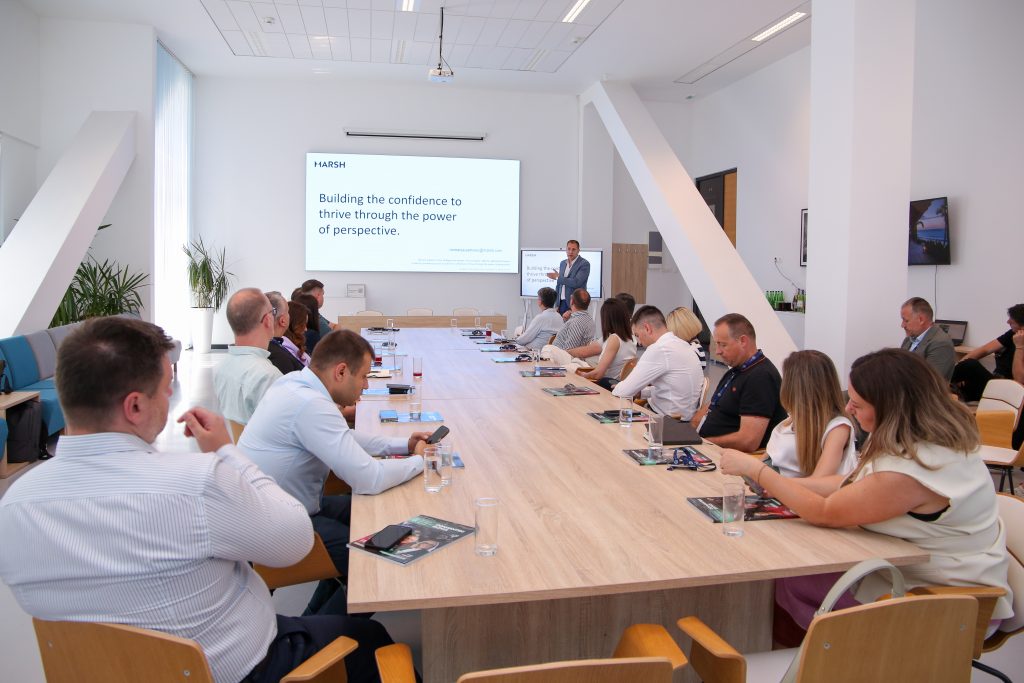
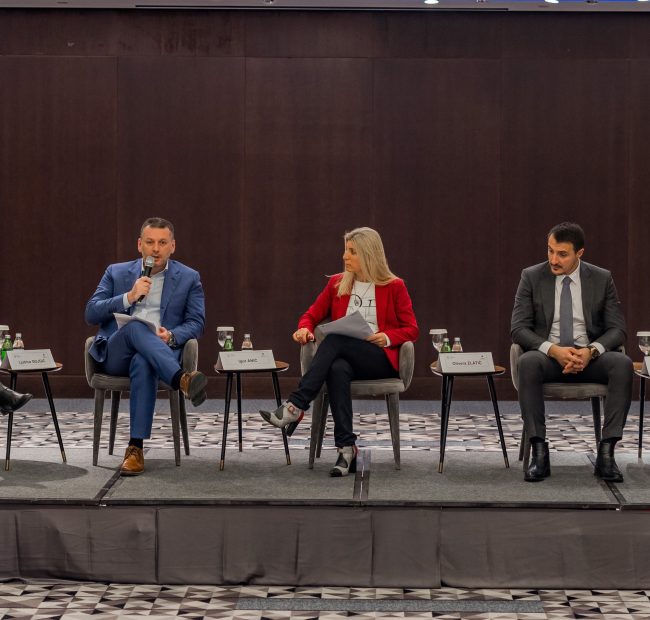
In the organization of the Business Intelligence Institute and the Institute for European Affairs, a business-diplomatic breakfast was held at the Metropol Hotel on the topic “ECO(nomic) aspect of the green transformation of companies”. The complexity of this topic is reflected in its implications for, among others, investments, companies, geopolitics, local politics and employment. This important topic was discussed by Olivera Zlatić, General Director, Enel PS; Anne-Kristin Piplica, Head of the Economic Department, Embassy of the Federal Republic of Germany, Igor Anić, President of the Executive Board, Procredit Bank and Miloš Colić, Managing Director, New Energy Solutons, while Ljubica Gojgić, journalist of Vojvodina Television, moderated the panel. Opinion on the given topic was also shared by Mr. Radman Selmić, adviser to the President of the Serbian Chamber of Commerce for green and circular economy and digital transformation.
According to the January 2022 World Economic Forum Report on global trends in risk, the biggest risks in the next 10 years have been identified as: the failure of climate action in the first place, extreme weather conditions in the second place (infectious diseases are in the 6th place, and on the 9th are debt crises).
The facts indicate that:
• Greenhouse gas emissions due to human activity have already raised the average global temperature by 1 °C since pre-industrial times. Estimates show that the world is on track to warm by 2.7 °C above pre-industrial levels by the end of this century under current policies and regulations, which would lead to serious problems.
• By signing the Paris Agreement, the countries undertook to keep the increase in the average global temperature well below 2 °C compared to the pre-industrial period until the end of the century (2100), and to aim for warming not to exceed 1.5 °C.
• By far the largest source of greenhouse gas emissions is the energy sector, which is responsible for around 73% of emissions. Within the energy sector, the most emissions come from electricity production and heating, which are responsible for 30.4% of total global emissions, followed by traffic with 15.9%.
• The share of agriculture in the total global greenhouse gas emissions is 11.8%. About half of these emissions are caused by animal husbandry, where animals release large amounts of methane during digestion.
• Aviation is responsible for about 2% of total world emissions. In terms of passenger numbers, airplanes pollute far more than buses and cars.
Mr. Igor Anić, President of the Executive Board of Procredit Bank, stated: “Thanks to the contract signed with the Electric Power Company of Serbia, ProCredit Bank became the first major buyer of “green” electricity in Serbia. Due to numerous innovations that we introduced in the headquarters and branches, the consumption of electricity was reduced by about 25%, while the consumption of thermal energy was reduced by almost 30%. We are constantly working on energy optimization and by our personal example we can contribute to empowering other legal entities to take similar actions. Additionally, we are working on spreading awareness about the importance of using electric cars, so that we have installed a total of 40 chargers, the use of which is completely free. Investing in electric cars and chargers coincides with the environmental commitment of ProCredit Bank, which has set environmental protection as one of the key business principles.”
“By investing in solar power plants, the producer is also a consumer. The average return on investment in solar panels is 6 to 8 years. The situation on the market indicates that the price of electricity of energy is growing more and more, that is, the return on investment is getting faster. With favorable loans and incentives, the energy transition becomes more accessible. In addition to the above, the installation of solar panels can be modular, that is, the investment can be multi-phased, which further facilitates the financial aspect of the transition”, explained Olivera Zlatić, General Director, Enel PS.
“The measurable impact of the wind farms in Kovačica on the local community is reflected in the reconstruction of 40 kilometers of roads, new workplaces, a sixfold increase in the efficiency of agricultural production, and the municipality of Kovačica collects about 500,000.00 euros per year from property taxes from wind farms.” Since the Compensation Mechanism for Increased Carbon Dioxide Emissions (CBAM) of the European Union should enter into force in 2026, a gradual introduction of taxes is desirable, in order for the economy to adapt to the new levies. This is important, because the EU is Serbia’s dominant export market,” emphasized Miloš Colić, Managing Director, New Energy Solutons.
Anne-Kristin Piplica, Head of the economic department, Embassy of the Federal Republic of Germany, emphasized that “Germany’s goal is to generate 80% of energy from renewable sources by 2030. This implies directing all sectors in the same direction, as well as further adjusting the legal regulations. The main message is to work together. This type of energy transition should be driven by public interest and public safety. With the new legal acts, Germany plans to subordinate 2% of its territory to wind farms”.